
Localization for Website | Why Translation Alone Fails?
Adapting content for markets

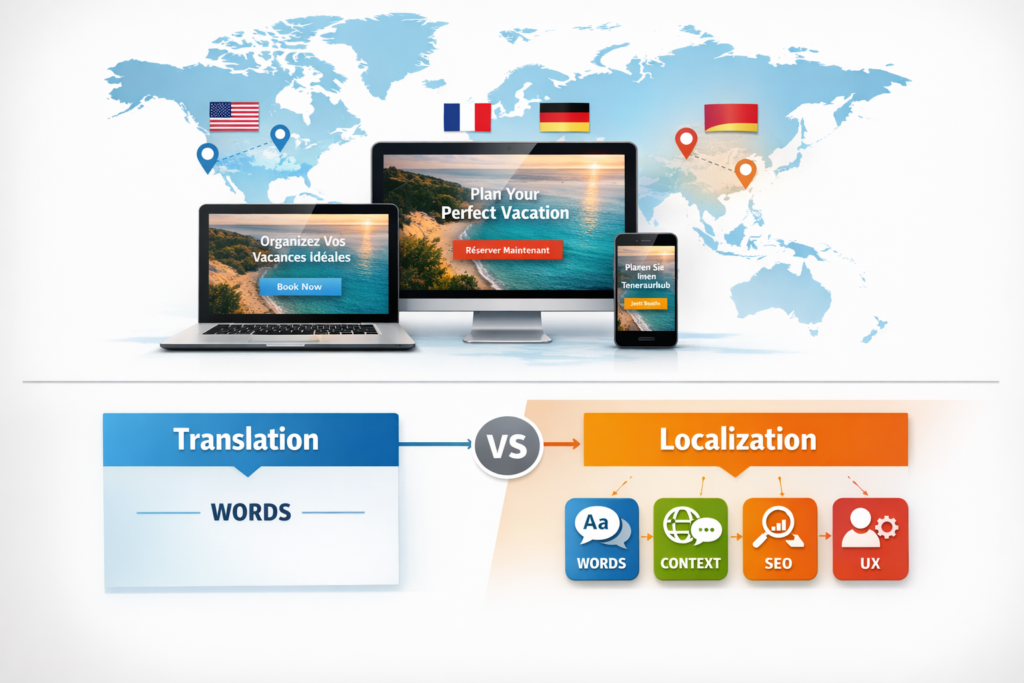
Localization for website goes far beyond translating text, as it involves adapting language, structure, and digital strategy to meet the expectations of a specific market. Many businesses assume that once their content has been translated, their website is ready for international audiences. In reality, translation is only one component of a much broader process. Localization ensures that your website feels natural, credible, and functional to users in a target region.
The difference between translating text and adapting a website lies in scope. Translation focuses on words. Localization addresses how those words interact with design, search behavior, cultural expectations, and user experience. A properly localized website considers linguistic nuance, technical configuration, SEO strategy, and usability elements. In this article, we will explore what localization for website truly includes and why it plays a crucial role in international growth.
What Is Localization for Website?
Localization for website refers to the process of adapting digital content, structure, and functionality to a specific target market. It is not simply about converting sentences from one language into another. Instead, it ensures that every element of a website aligns with the linguistic, cultural, and technical expectations of users in a particular region.
Unlike translation, which focuses on language accuracy, localization considers how content performs in context. Websites are interactive environments. They include navigation menus, calls to action, forms, metadata, and technical configurations that influence visibility and usability. This is why websites require more than linguistic conversion. They require strategic adaptation.
How Localization for Website Differs from Translation
Linguistic Scope
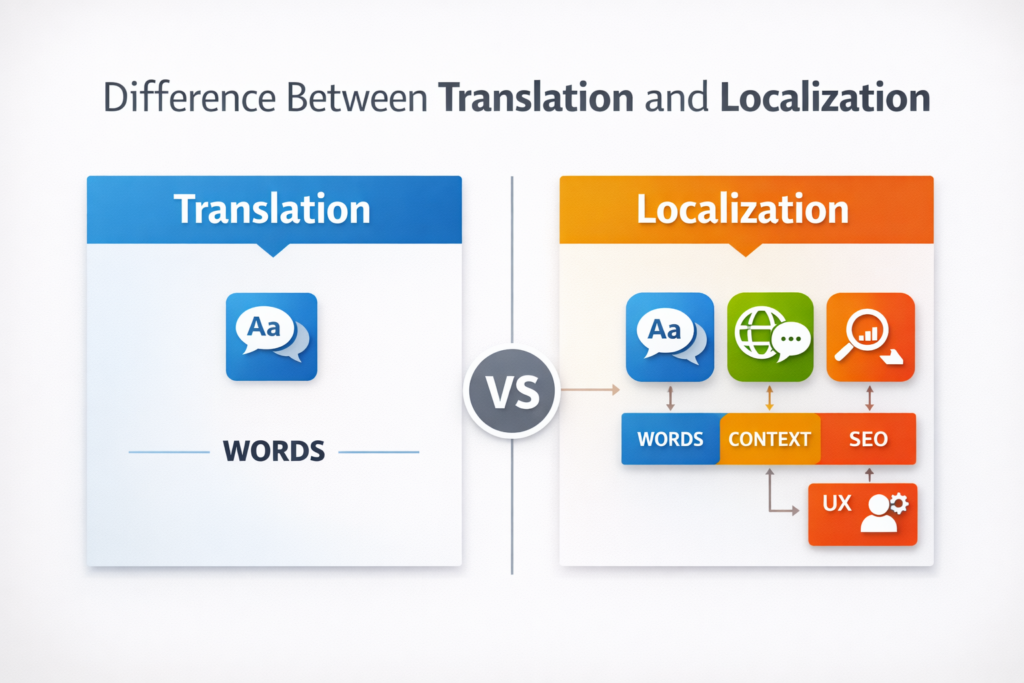
Translation focuses on language. It aims to convey meaning accurately from a source language to a target language. Localization expands that scope. It considers language within context: industry terminology, user expectations, and communication style.
Translation = language.
Localization = language plus context.
Cultural Adaptation
Localization also addresses cultural elements. Tone of voice may need to shift between markets. References that make sense in one country may feel unfamiliar in another. Even symbols, colors, and imagery can carry different meanings depending on cultural background.
Ignoring these factors can reduce credibility and trust.
Functional Impact
Websites are functional systems. Localization affects navigation labels, form fields, layouts, and user behavior. Text expansion in languages like German can break design if not anticipated. Date formats, currency symbols, and measurement units must reflect local standards. These are functional aspects that translation alone does not cover.
What Localization for Website Actually Includes
Linguistic Adaptation
Effective localization requires tone adjustment, terminology consistency, and the use of market-specific vocabulary. The way a SaaS product is described in the United States may differ from how it should be presented in Europe. Terminology must remain consistent across pages to maintain clarity and authority.
Technical Adjustments
Technical configuration is essential. Localization often involves:
- Adapting URL structures
- Implementing hreflang tags
- Localizing metadata (title tags and descriptions)
- Adjusting date, currency, and unit formats
- Managing text expansion issues
Without these elements, even well-translated content may fail to perform properly.
SEO Localization
SEO is frequently overlooked in website localization. Keywords do not translate directly. Search intent varies between markets. A literal keyword translation may have no search volume or may reflect a different intent entirely.
Localization for website includes market-specific keyword research, alignment with local search behavior, and adaptation to local SERP dynamics. This ensures visibility in the target region.
UX and Conversion Elements
User experience plays a significant role. Calls to action may require adaptation to match local communication norms. Trust signals, such as certifications or payment methods, vary by country. Legal mentions may also differ depending on jurisdiction.
Localization helps ensure that users not only understand your content, but also feel confident interacting with it.
The Professional Process Behind Localization for Website
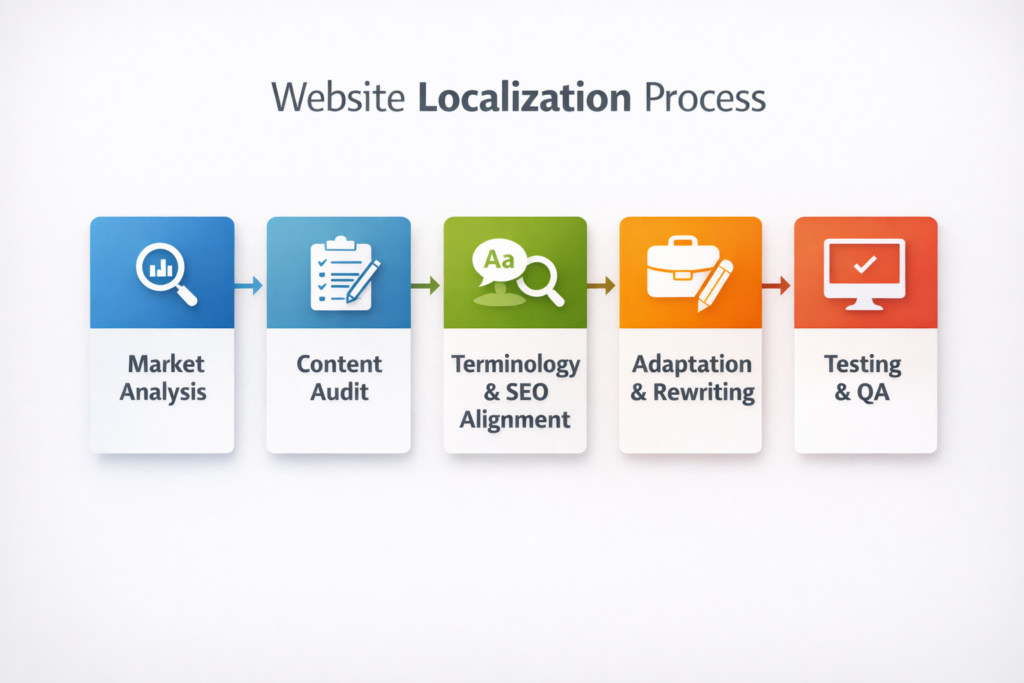
A structured approach ensures consistency and quality.
- Market analysis – Understanding the target audience and competitive landscape.
- Content audit – Identifying what needs adaptation beyond text.
- Terminology and SEO alignment – Establishing consistent language and keyword strategy.
- Adaptation and rewriting – Adjusting tone, structure, and messaging.
- Testing and quality assurance – Reviewing the localized version in context to ensure functionality and coherence.
This methodical process differentiates professional localization from basic translation.
Common Mistakes in Website Localization
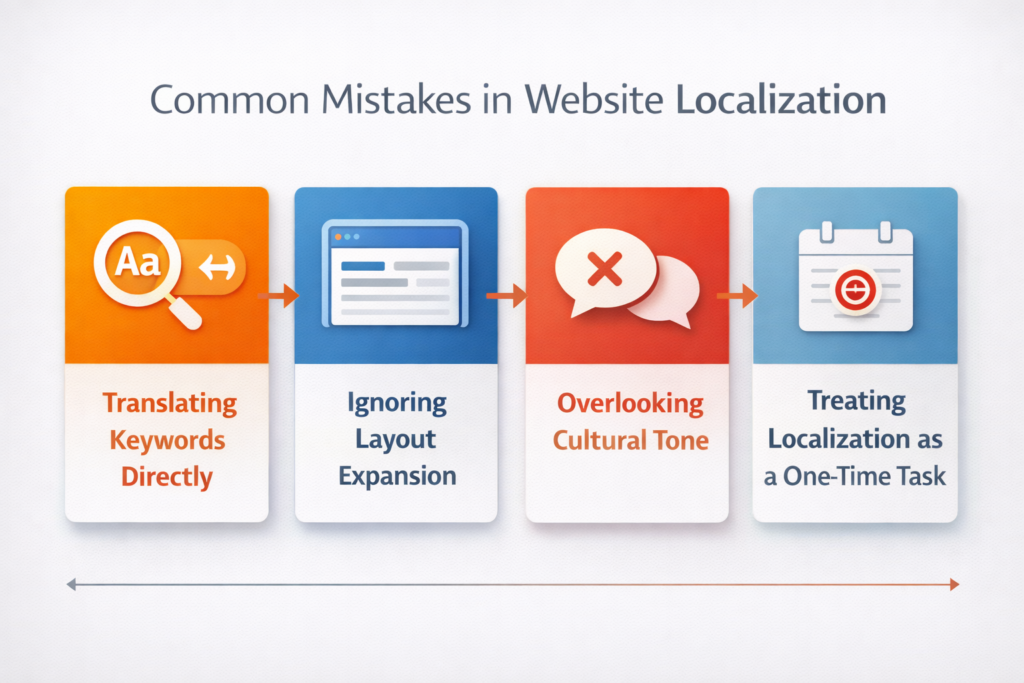
Several errors frequently undermine localization efforts:
- Translating keywords directly without market research
- Ignoring layout expansion and technical constraints
- Overlooking cultural tone and communication style
- Treating localization as a one-time task rather than an ongoing strategy
These mistakes can limit visibility and reduce user trust.
When Businesses Need Localization for Website
Localization becomes essential when:
- Expanding into new international markets
- Entering multilingual regions such as Belgium
- Launching SaaS products globally
- Targeting organic visibility abroad
In each case, adapting the website strategically is crucial for sustainable growth.
Conclusion
Localization for website includes far more than translation. It requires language adaptation, cultural alignment, technical implementation, SEO integration, and user experience considerations. When these elements work together, a website becomes truly accessible and effective in a new market.
Businesses that treat localization as a strategic investment rather than a linguistic task position themselves for stronger international performance. Professional support ensures that every aspect of the website aligns with the expectations of its target audience.